
Wheeling & Dealing: Pelvic-Femoral Coordination in the Dancer
Pelvic–Femoral Coordination in the Dancer
Dancers routinely move through large ranges of hip motion while simultaneously organizing the pelvis and trunk for balance, direction, speed, and artistic intent. The ability to differentiate motion at the hip from motion of the pelvis is therefore not simply an isolated mobility skill; it is part of how the dancer distributes movement and load throughout the kinetic chain.
This course examines pelvic–femoral coordination from both a clinical and movement-education perspective. Participants will investigate femur-on-pelvis and pelvis-on-femur movement in open- and closed-chain contexts, observe common compensatory strategies, and explore how changes in trunk and pelvic organization influence available hip motion.
Movement exploration will be connected to clinical presentations commonly seen in dancers, including anterior hip pain, femoroacetabular impingement-related presentations, labral pathology, snapping hip, proximal hamstring symptoms, and other conditions in which movement strategy and load distribution may be relevant.
Rather than focusing on a single “correct” position, the course emphasizes observation, differentiation, variability, and the ability to choose movement strategies that match the demands of the task.
Key Content / Course Themes
Femur-on-pelvis versus pelvis-on-femur movement
Pelvic–femoral differentiation in open-chain and closed-chain tasks
Trunk and pelvic organization during hip movement
Movement strategies used to create stability
Influence of hip flexor, hamstring, and adductor recruitment on movement organization
Recognition of gripping, bracing, and compensatory strategies
Observation of functional and dancer-specific movement
Clinical reasoning, cueing, exercise selection, and movement retraining
Application to common hip and proximal lower-quarter presentations in dancers
Course Objectives
Upon completion of this course, participants will be able to:
Differentiate femur-on-pelvis and pelvis-on-femur movement strategies during open-chain, closed-chain, and dancer-specific movement tasks.
Analyze pelvic-femoral coordination during common dance movements, including turnout, plié, weight transfer, leg gestures, changes in level, directional changes, and single-leg support.
Identify compensatory movement strategies involving the pelvis, trunk, hip, and supporting limb that may alter movement efficiency or load distribution in the dancer.
Recognize lumbopelvic stabilization strategies that contribute to gripping, bracing, or excessive muscular recruitment during dance movement.
Compare the movement and stabilization demands of the gesture leg and supporting leg during dancer-specific tasks.
Select and progress exercises that improve pelvic-femoral differentiation and coordination, moving from foundational open- and closed-chain exercises to functional and dancer-specific movement.
Apply hands-on facilitation, movement-based strategies, and cueing to improve pelvic-femoral coordination during rehabilitation and return to dance.
Audience
This course is designed for healthcare practitioners, movement professionals, and dance educators who work with dancers or are interested in dancer health and movement. The material may be applicable to physical therapists, physical therapist assistants, physicians, athletic trainers, Pilates and other movement professionals, strength and conditioning professionals, dance educators, and other professionals working in dancer health.
Any evaluation, assessment, or treatment techniques presented in the course should be utilized only to the extent permitted by each participant’s professional scope of practice and applicable regulations.
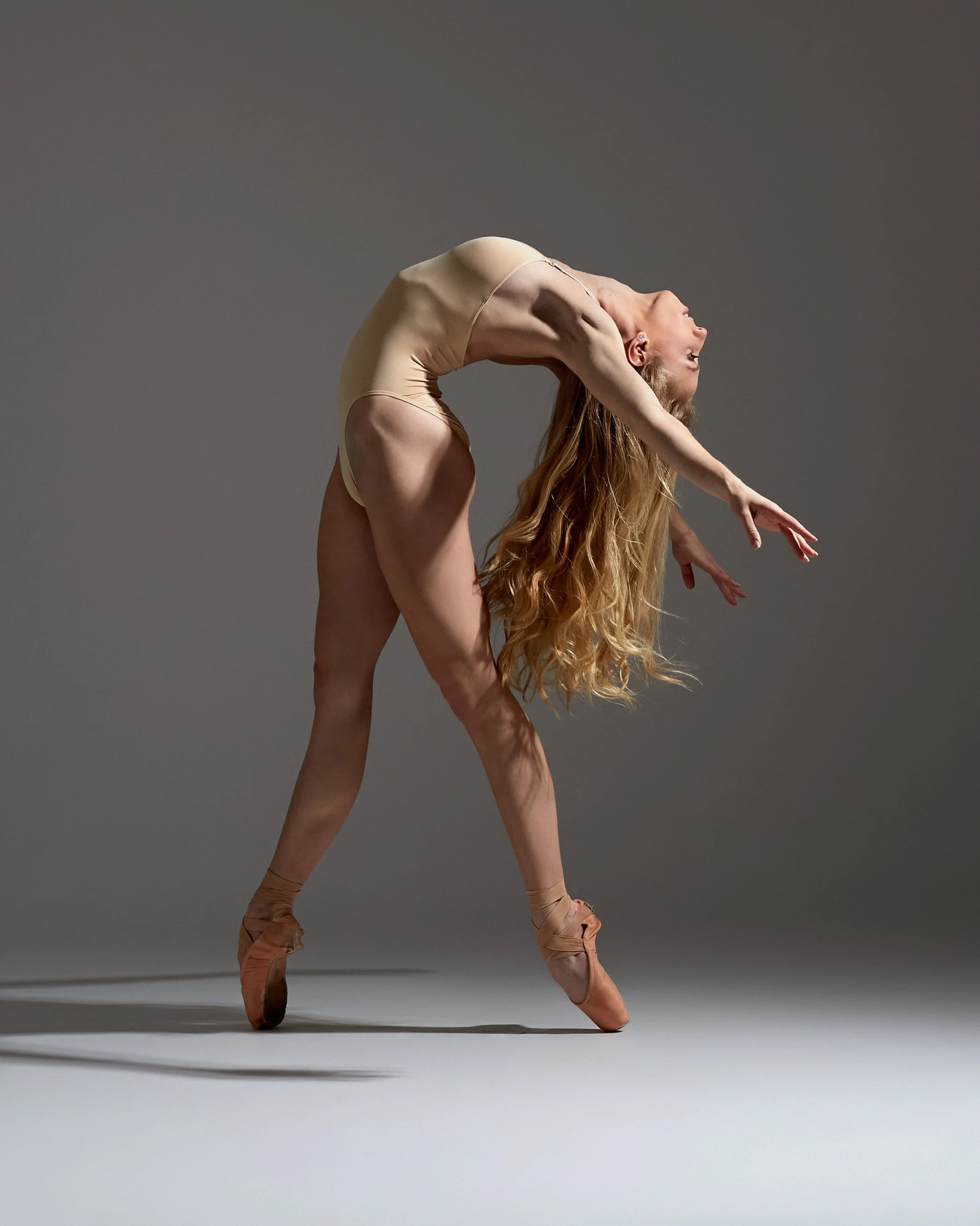
Title: Wheeling & Dealing
Subtitle: Pelvic–Femoral Coordination in the Dancer
Presented by: Andrea Zujko PT, DPT, OCS, COMT and Lesley Powell
Date: Saturday, December 5, 2026
Format: In-person
Location: Westside Dance Physical Therapy, New York, NY
Time Frame: 10:00 AM–4:00 PM (Eastern Time)
Price: $475.00
Dance Medicine Education Initiative is pleased to present a specialty course with Andrea Zujko and Lesley Powell focused on the relationship between the pelvis and femur in dancer-specific movement. The course explores how dancers differentiate movement of the femur on the pelvis and the pelvis on the femur in both open-chain and closed-chain tasks, and how this relationship contributes to efficient movement organization.
Through anatomy, movement observation, experiential learning, and clinical application, participants will examine how pelvic–femoral coordination changes across functional and dancer-specific movement. Particular attention will be given to the ways dancers create trunk and pelvic stability while the hip remains available for movement.
The course will explore movement strategies in which the hip flexors, hamstrings, adductors, and other surrounding musculature may be recruited to create stability or control when lumbopelvic organization is challenged. Participants will consider how gripping, bracing, or excessive muscular recruitment may influence movement options and contribute to symptoms or inefficient strategies.
Using guided movement exploration and case-based application, participants will develop a more nuanced way of observing who is moving whom—the femur on the pelvis, the pelvis on the femur, or both—and use that information to inform cueing, exercise selection, and movement retraining for dancers.
Registration
Pricing & Discounts:
Standard registration price: $475.00
Early bird registration price: $425.00 through November 7, 2026 with code WHEEL50
Registrations made after November 7th, 2026 at 11:59 pm are $475.00